How Hormones Affect Body Odor (Menopause, Pregnancy, Puberty)
by Eve Hanson
Short answer: Yes, hormonal changes can make you smell stronger. Shifts in estrogen, progesterone, and testosterone affect how much you sweat, how your skin behaves, and how odor-causing bacteria grow — often in ways your usual routine isn't built to handle.
Body odor is not caused by sweat itself. It happens when bacteria on your skin break down sweat — a process explained in detail in Sweat vs. Odor: What Actually Causes Body Smell. Hormones influence this process in a few important ways:
- They increase sweat production, especially during puberty, pregnancy, and menopause
- They change your skin's chemistry, which affects how bacteria grow
- They impact where you sweat — underarms, groin, under the breasts, and beyond
- They can make odor more noticeable or longer lasting
That is why you might notice a sudden change in how you smell even if your routine has not changed. For a deeper breakdown of how sweat turns into odor, see Cleveland Clinic – "What Causes Body Odor?".
Puberty
Why Body Odor Starts During Puberty
Short answer: Puberty is when body odor usually begins because hormones activate certain sweat glands for the first time.
During puberty, rising androgen levels — including testosterone — activate apocrine sweat glands, which are concentrated in the underarms and groin. Unlike the sweat glands active in childhood, apocrine glands produce a thicker secretion rich in proteins and lipids. Bacteria feed on these compounds, which is what creates odor.
What this means:
- Sweat becomes thicker and more likely to smell
- Odor may become noticeable for the first time, even with regular washing
- Areas like underarms and groin can smell stronger than before
What helps:
- Daily washing, especially after sweating
- Wearing breathable, natural fabrics
- Using deodorant consistently — not just when odor is already present
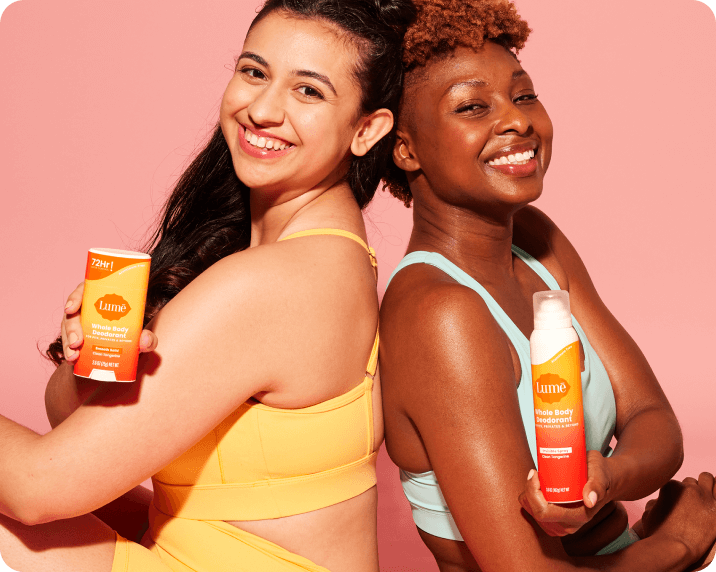
Because puberty-related odor often affects more than just the underarms, products designed for whole body odor control can make a meaningful difference. Lume's aluminum-free formulas are dermatologist-tested and designed to be gentle enough for sensitive or younger skin — applied wherever odor shows up, not just underarms. For a full breakdown of what whole body deodorant is, how it works, and where it can be used, see The Complete Guide to Whole Body Deodorant.
Pregnancy and Postpartum
Is Aluminum-Free Deodorant Safe During Pregnancy?
Short answer: Aluminum-free deodorants are generally considered safe during pregnancy, but check with your healthcare provider if you have specific concerns.
Many people choose aluminum-free options during pregnancy because they work without blocking sweat glands. Instead of plugging pores, they target the odor-causing bacteria on skin — allowing the body to sweat naturally while still managing smell. Lume's aluminum-free formulas work this way: controlling odor at the source without interfering with the body's natural processes, which is part of why they're a common choice during pregnancy.
For general guidance on skin and body care during pregnancy, see American College of Obstetricians and Gynecologists – "Skin Conditions During Pregnancy".
What to look for:
- Aluminum-free formulas that don't interfere with the body's natural processes
- Little to no synthetic fragrance — sensitivity to scent often increases during pregnancy
- Clinically tested options gentle enough for sensitive or changing skin
- Formulas that work beyond the underarms, since pregnancy can cause odor in new areas — including the groin and inner thighs, which have their own considerations covered in How to Safely Manage Odor in Intimate and Sensitive Areas
→ What Is The Best Deodorant for Pregnancy?
Postpartum Odor Changes
Short answer: Yes, postpartum hormone shifts can temporarily make body odor stronger — and it is more common than most people talk about.
After childbirth, estrogen drops rapidly as the body recalibrates. This hormonal shift can lead to heavier sweating, particularly at night, along with odor that smells different or stronger than usual. Changes in underarm and vaginal scent are both normal and typically temporary.
Interestingly, research suggests that scent plays an active role in early bonding. Studies published by the National Institutes of Health have found that newborn body odor activates reward-related areas of the brain in mothers, and that infants can recognize their parent's scent from birth. What your body is doing has a purpose, even when it feels uncomfortable. (Source: PMC – Maternal status regulates cortical responses to the body odor of newborns)
For more on postpartum body changes, see Mayo Clinic – "Postpartum Care: What to Expect".
What helps:
- Gentle daily cleansing, especially in skin folds and areas prone to moisture
- Breathable clothing and bedding
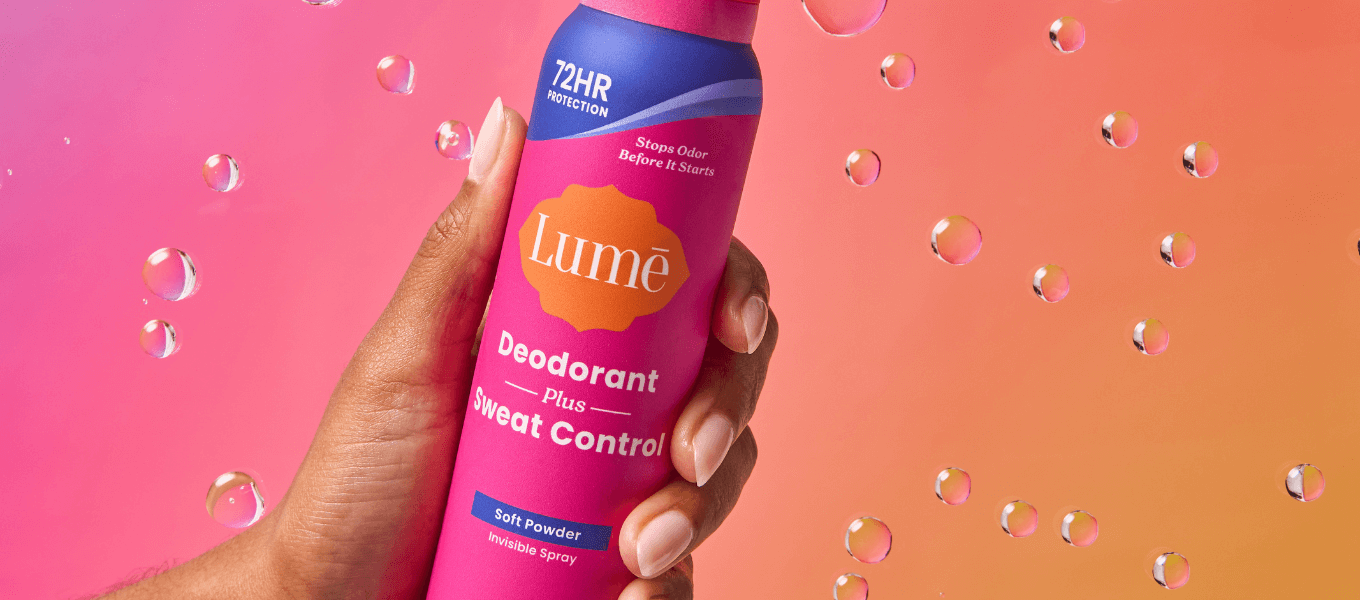
- An odor-control product that works across the whole body, not just underarms — postpartum sweating often shifts in unpredictable ways, and Lume's Spray Deodorant is designed for exactly that kind of touchless, full-coverage application
→ 3 Helpful Tips For Getting Started
Menopause
Why Body Odor Changes During Menopause
Short answer: Declining estrogen makes it harder for your body to regulate temperature, which leads to more sweating — and more opportunity for odor.
As estrogen levels fall, the hypothalamus (your body's internal thermostat) becomes more sensitive to temperature changes. The result is hot flashes, night sweats, and overall increased perspiration. More sweat on the skin means more for odor-causing bacteria to feed on.
At the same time, shifts in skin pH and the skin's microbiome — the community of bacteria naturally living on your body — can change how odor forms and where it appears. This is part of why Lume's formula targets bacteria directly rather than masking smell — it stops odor before it starts, which becomes especially relevant when the microbiome shifts during menopause.
Learn more about these hormonal changes: North American Menopause Society – "Menopause Symptoms".
Is Menopause Causing Stronger Underarm Odor?
Short answer: Yes, and it is not just in your head. Products that worked well for years may genuinely work less effectively as your body changes.
During menopause, a few things shift at once: sweating becomes more frequent and unpredictable, skin pH changes, and sensitivity to certain ingredients can increase. This combination can make standard antiperspirants and deodorants feel less reliable.
Common reasons your usual product may fall short:
- More frequent or intense sweating episodes
- Changes in skin pH that affect how deodorant adheres or performs
- Increased skin sensitivity to fragrances or active ingredients
What tends to help:
- Switching to an aluminum-free formula if irritation or sensitivity is a concern
- Applying to clean, dry skin — especially after a shower and before bed, when bacterial growth is lower
- Considering a whole body formula, since menopausal sweating often shows up in new areas — inner thighs, under the breasts, and the groin, each of which has its own skin considerations when it comes to product safety and ingredient choice
FAQ
Does Body Odor Change with the Menstrual Cycle?
Short answer: Yes — hormonal fluctuations throughout the menstrual cycle can affect how you smell, though the changes are often subtle and vary by person.
Estrogen and progesterone levels shift significantly across the cycle. Around ovulation, some research suggests body temperature rises slightly, which can increase sweating. In the luteal phase (after ovulation), progesterone dominates and can also elevate body temperature and perspiration. For people who are sensitive to these shifts, odor may feel stronger or different at certain points in the month — particularly in the days before menstruation, when hormones drop sharply.
These changes are normal and follow the same biological mechanism as odor during other hormonal life stages: more sweat means more material for odor-causing bacteria to act on. Consistent odor-control habits throughout the month — rather than reactive ones — tend to be more effective than adjusting only when odor becomes noticeable.
What Is the Difference Between Night Sweats and Regular Sweating?
Short answer: Night sweats are more intense and are often linked to hormonal changes, while regular sweating is part of your body's normal cooling process.
Night sweats:
- Common during menopause and the postpartum period
- Can be heavy enough to soak clothing or bedding
- Triggered by hormonal fluctuations rather than physical activity or heat
Regular sweating:
- Occurs with exercise, heat, or stress
- Generally lighter and more predictable
Because night sweats are heavier and last longer on the skin, they tend to create more opportunity for odor — especially overnight. Applying odor control before bed, not just in the morning, can make a noticeable difference.
The Bottom Line
Hormonal changes during puberty, pregnancy, postpartum, and menopause can all affect how your body smells. If your odor has shifted — stronger, different, or showing up in new places — there is a real biological reason behind it.
The good news: adjusting your routine can help.
- Focus on managing odor rather than just blocking sweat — understanding that sweat and odor are different problems is the first step
- Look for aluminum-free, clinically tested formulas designed for sensitive or changing skin
- Consider products built for whole body use, since hormonal odor rarely stays in just one place — look for formulas explicitly tested for use beyond the underarms
- Be consistent, especially during periods when sweating increases — and if you're not sure where to start, Getting Started with Lume walks you through the basics.
Lume makes clinically tested deodorant formulas — including aluminum-free and sweat control options — with select formulas designed for use across multiple areas of the body, from underarms to external intimate areas and feet.