The Complete Guide to Whole Body Deodorant
by Eve Hanson
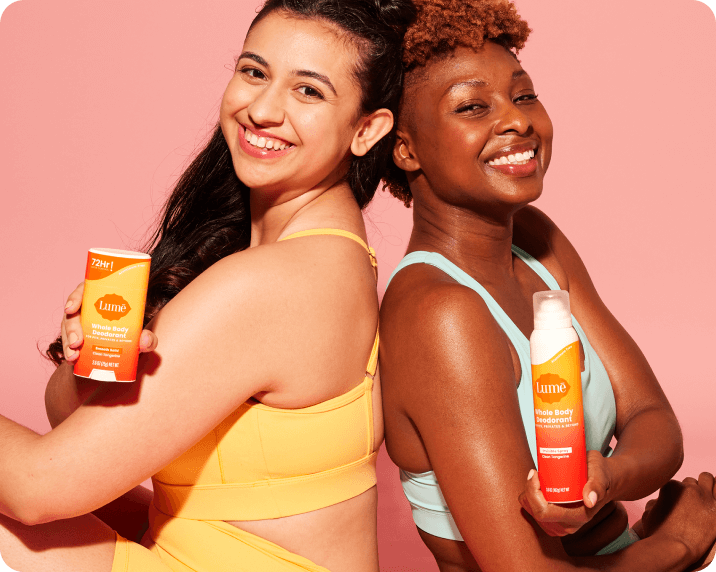
Whole Body Deodorant is designed to control odor anywhere on the body — not just the underarms. Unlike standard deodorants formulated for underarm skin only, whole body deodorant is tested and designed to be safe and effective across a wider range of areas, including sensitive skin that standard products weren't built for.
If you have ever noticed odor showing up somewhere other than your underarms and felt like your regular deodorant had no answer for that, whole body deodorant is worth understanding.
What Is Whole Body Deodorant?
Short answer: Whole Body Deodorant is an odor-control product formulated and tested to be safe and effective across multiple areas of the body — including underarms, inner thighs, groin, under the breasts, and feet — rather than underarms only.
Most conventional deodorants and antiperspirants are designed specifically for underarm use. They often contain ingredients — like aluminum salts or baking soda — that work well in that area but can cause irritation on more sensitive skin elsewhere.
Whole Body Deodorant takes a different approach — formulated and tested to be safe and effective across a wider range of areas than standard underarm-only products. Lume pioneered this category with a formula built specifically around a bacterial-targeting mechanism — developed by Dr. Shannon Klingman, an OB-GYN who noticed that women coming in with odor concerns were frequently being misdiagnosed with Bacterial Vaginosis and sent home with antibiotics, when the actual source of odor was external skin, not the vagina. For a deeper explanation of why bacteria — not sweat — are the actual source of body odor, see Sweat vs. Odor: What Actually Causes Body Smell.
The key distinction:
- Antiperspirant — blocks sweat glands using aluminum compounds; typically designed for underarms only
- Standard deodorant — masks or reduces odor; may contain baking soda that irritates sensitive skin
- Whole Body Deodorant (aluminum-free) — targets odor-causing bacteria without blocking sweat; formulated and tested for use beyond the underarms, including sensitive areas
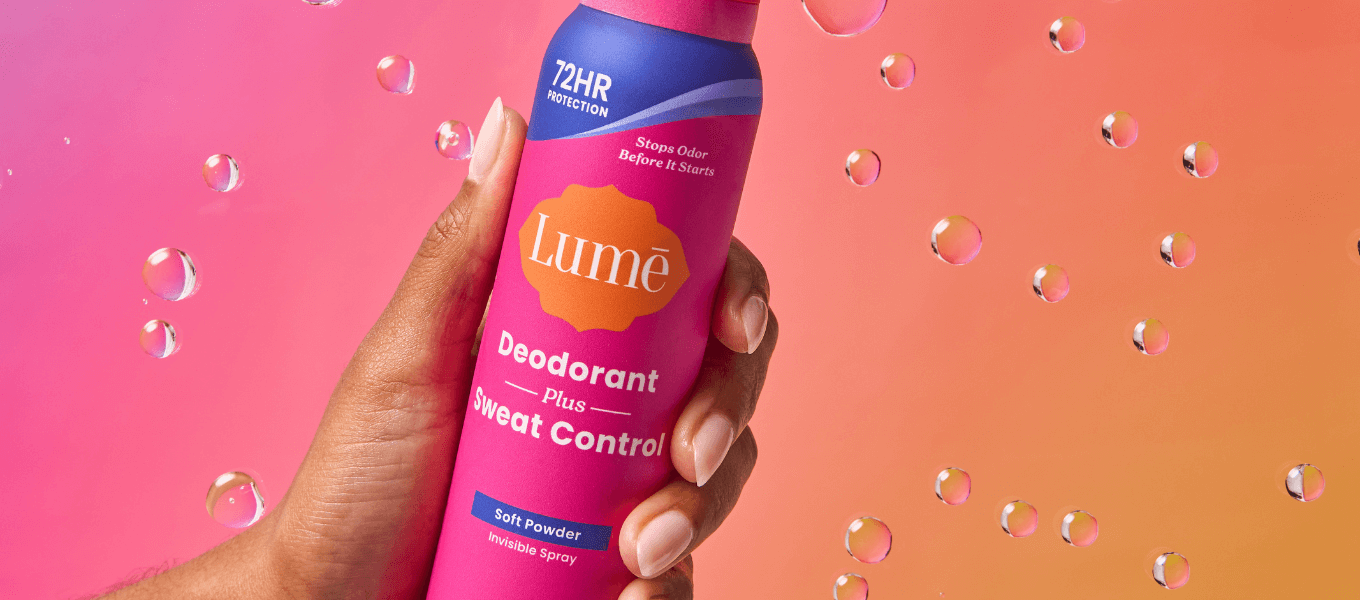
- Whole Body Deodorant + sweat control — combines aluminum-based sweat reduction with odor-targeting actives; formulated for whole body use (see Lume's Cream Deodorant plus Sweat Control line)
Where Can You Use Whole Body Deodorant?
Short answer: Whole Body Deodorant can be used on the underarms, under the breasts, inner thighs, groin, feet, and other areas prone to odor. Always check the product label for specific guidance.
Odor does not limit itself to the underarms — and neither should odor control. Common areas where people find whole body deodorant useful include:
- Underarms — the most common use, effective as a standard deodorant replacement
- Under the breasts — skin-on-skin contact creates warmth and moisture, ideal conditions for odor-causing bacteria
- Inner thighs and groin — another high-friction, high-moisture area where odor frequently develops
- Feet — particularly between the toes, where bacteria thrive in warm, enclosed conditions
- Belly button and skin folds — less commonly discussed, but equally susceptible to odor from bacterial activity
Can You Use Whole Body Deodorant on Intimate Areas?
Short answer: Some whole body deodorants are formulated for use on external intimate areas, but it depends on the specific product and its ingredients.
The skin in and around the groin and vulva is significantly more sensitive than underarm skin — it has a different pH, a more complex microbiome, and a thinner barrier that is more easily disrupted by harsh ingredients. Lume's formula was specifically designed with this in mind: it is pH-balanced and free of baking soda, making it appropriate for external intimate use in a way most standard deodorants are not. For a full breakdown of what to look for, what to avoid, and how to build a safe routine for that area, see How to Safely Manage Odor in Intimate and Sensitive Areas.
Products should only ever be applied externally. Nothing should be used internally. When in doubt, check with a healthcare provider.
How Does Whole Body Deodorant Work?
Short answer: Whole Body Deodorant works by targeting the bacteria that cause odor on the skin — and aluminum-free formulas do this without blocking sweat glands, allowing the body to sweat naturally.
Sweat is largely odorless. The smell associated with body odor comes from bacteria on the skin breaking down compounds in sweat — particularly in apocrine glands, which are concentrated in the underarms, groin, and other high-odor areas. This is the same process that explains why odor varies by body area and by person. It is also why Lume's Solid Stick Deodorant targets bacteria directly rather than blocking sweat — the same formula works across the underarms and beyond.
Whole Body Deodorant changes the environment on the skin surface so that odor-causing bacteria cannot break down sweat as effectively. Aluminum-free formulas do this without blocking sweat glands, meaning your body continues to sweat normally — an important distinction, since sweating is a natural function that regulates body temperature and supports skin health.
Does Aluminum-Free Deodorant Actually Work?
Short answer: Yes — but it works differently than antiperspirant, and understanding that difference sets the right expectations.
Aluminum-free deodorant does not reduce sweating. If you are switching from an antiperspirant, you will likely notice more moisture under your arms, especially in the first few weeks. This is normal — your sweat glands are no longer being blocked.
What aluminum-free deodorant does do is control the odor that comes from that sweat. When it is formulated well — with the right pH, odor-neutralizing actives, and skin-compatible ingredients — it can provide effective odor protection throughout the day. For Lume's aluminum-free formulas, clinical testing is built around odor control — not sweat reduction — as the benchmark.
How Long Does It Take to Adjust After Switching?
Short answer: Most people notice an adjustment period of one to four weeks when switching from antiperspirant to aluminum-free deodorant.
During this period, sweat glands that were previously blocked begin functioning normally again. Some people temporarily experience more sweating or odor than usual. This is not a sign the product is failing — it is the body recalibrating.
Tips for a smoother transition:
- Apply to clean, dry skin for best results
- Try applying before bed as well as in the morning, when bacterial counts on skin are lower
- Give the product at least three to four weeks before drawing conclusions
Why Do I Smell Worse After Switching?
Short answer: Increased odor in the first few weeks after switching is common and typically temporary.
When aluminum is no longer blocking your sweat glands, both sweat and any bacteria that had built up are released. The skin's microbiome — the community of bacteria living on your body — also takes time to rebalance. This adjustment period is sometimes called a "detox," but it is more accurately described as your skin's bacterial environment normalizing after pore-blocking ingredients are removed.
Using a gentle cleanser daily during this period can help manage the transition.
Is Whole Body Deodorant Safe?
Short answer: Whole Body Deodorants formulated for sensitive skin and free of common irritants are generally considered safe for most people, including for use on sensitive areas.
Is It Safe for Sensitive Skin?
Short answer: It depends on the formula. Look for products that are fragrance-free or use skin-compatible scent, free of baking soda and alcohol, and dermatologist-tested.
Baking soda is a common deodorant ingredient that works well for some people but causes irritation and redness for others — particularly on sensitive or darker skin tones. Alcohol can cause dryness and stinging. Synthetic fragrance is a frequent trigger for contact dermatitis. These concerns are even more pronounced in intimate and sensitive areas, where the skin has a lower pH and a thinner barrier than underarms.
Ingredients worth looking for:
- Mandelic acid — an alpha-hydroxy acid that lowers skin pH, reducing the surface buildup that contributes to bacterial activity. Lume uses mandelic acid as a key active for exactly this reason: it creates an environment where odor-causing bacteria have a harder time thriving.
- Zinc — a naturally occurring mineral with well-documented odor-neutralizing properties, found in some whole body formulas and cleansing products
- Magnesium — used in some aluminum-free formulas to help absorb moisture and neutralize odor compounds
- pH-balanced formulas — support the skin's natural protective environment
Is It Safe During Pregnancy?
Short answer: Aluminum-free, fragrance-sensitive whole body deodorants are generally considered a safe option during pregnancy, but check with your healthcare provider if you have any concerns.
Hormonal changes during pregnancy don't just increase sweating — they can shift where odor appears on the body, sometimes for the first time. Fragrance sensitivity often increases during pregnancy, so unscented options or those with minimal scent are worth considering.
How Long Does Whole Body Deodorant Last?
Short answer: Effective whole body deodorants typically provide 24 to 72 hours of odor protection, depending on the formula, activity level, and area of application.
Odor protection longevity varies by product and by where it is applied. Underarms, for example, are an area of high bacterial activity, while feet may require more frequent reapplication depending on footwear and activity.
For best results:
- Apply to clean, dry skin
- Reapply as needed based on activity — sweating heavily or showering will reduce duration
- Applying before bed can extend effective coverage, since bacterial counts are lower overnight and the product has more time to work before the day begins
Building a Full-Body Odor Control Routine
Whole Body Deodorant works best as part of a consistent routine rather than a reactive fix. A few principles that make a meaningful difference:
Daily cleansing — Washing with a body wash or cleansing bar that helps manage bacteria on the skin creates a better baseline for any deodorant to work from.
Apply to dry skin — Moisture dilutes the formula and reduces how well it adheres. Patting skin dry before applying improves performance.
Cover the right areas — Think about where odor actually shows up for you, not just the underarms. Under the breasts, inner thighs, and feet are commonly overlooked. Intimate areas require extra care around ingredients and pH — the skin there is more sensitive and has different needs than underarm skin.
Be consistent — Odor control works better as a prevention strategy than a remedy. Daily use, even on low-activity days, keeps bacterial levels in check.
Dermatologist Perspective: Aluminum-Free vs. Antiperspirant
Short answer: Neither is universally better — the right choice depends on your body, skin, and priorities.
Antiperspirants are clinically effective at reducing sweat and are appropriate for people who experience hyperhidrosis (excessive sweating) or who need maximum sweat control for work or lifestyle reasons. Dermatologists do not generally advise against them for healthy adults.
Aluminum-free deodorants are a reasonable alternative for people who prefer to avoid aluminum, have sensitive skin, are pregnant, or find that antiperspirants cause irritation. They do not reduce sweating, but for people whose primary concern is odor — not moisture — they can be equally effective. The key is knowing which problem you are trying to solve: sweat or odor.
FAQ
What Is the Difference Between Whole Body Deodorant and Regular Deodorant?
Short answer: Regular deodorant is formulated for underarm use only. Whole Body Deodorant is specifically formulated and tested to be safe and effective across a wider range of areas — including the groin, inner thighs, under the breasts, and feet.
The distinction comes down to formulation intent and testing. Standard deodorants often contain baking soda or other actives that work fine on thick underarm skin but can cause irritation, redness, or pH disruption on more sensitive areas. Whole Body Deodorants are formulated with those areas in mind, making them appropriate for broader use.
Most whole body deodorants are aluminum-free and work by targeting odor-causing bacteria directly. Some, like Lume's Sweat Control line, also include aluminum for sweat reduction. Either way, the defining characteristic is that they are tested and designed for the full body — not just underarms. That testing matters: skin in the groin and intimate areas has a different pH, a thinner barrier, and a more complex microbiome than underarm skin, so a formula that works well in one place won't necessarily be safe in another.
The Bottom Line
Whole Body Deodorant is a practical solution for odor that goes beyond the underarms — which, for most people, is exactly where odor actually lives. Formulated and tested for use across the full body, it offers a gentler option for areas that standard underarm products were never designed to reach.
What to look for in a whole body deodorant:
- Formulated and tested for use beyond the underarms — including sensitive areas
- Free of baking soda if you have sensitive skin
- Formulated with odor-neutralizing actives like mandelic acid, zinc, or magnesium
- Clinically tested and dermatologist-reviewed
- Effective for 24 hours or more to fit a realistic daily routine
- Aluminum-free if you prefer to sweat naturally; sweat control formulas available if you want both odor and moisture management
If you are navigating hormonal changes that are affecting where and how much you sweat — during menopause, pregnancy, or puberty — odor often shows up in new places that underarm-only products were never designed for. How Hormones Affect Body Odor covers what is happening biologically and what tends to help. Ready to try it? Getting Started with Lume has everything you need.
Lume makes a range of clinically tested whole body deodorant formulas — including aluminum-free and sweat control options — available in stick, cream, and spray formats, each tested for odor control across underarms, external intimate areas, and feet.